Pre-Match Notes That Keep the Score Guess Out
Pre-match notes without a predicted score give you a steady way to follow one tactical question, spot changes in team roles, and stay curious through the match.
You open the match stream as the lineups appear, and the score prediction on your phone is already pulling your attention away from the teams. Pre-match notes without a predicted score can give you one steady question to follow instead: what is each team trying to make happen, and what changes when the game pushes back?
Choose one thread
Use the same simple routine whether you are watching every minute or glancing up from dinner: write one tactical question, name a visible clue, then note how that clue changes. A single thread is easier to carry through a match than separate questions for every team, phase, or viewing situation.
Keep the question specific enough to recognize during play. “How will the teams attack?” is too broad; “When the home side builds down the right, does its winger stay wide or move inside?” points to a role and a situation you can actually watch.
Build the note
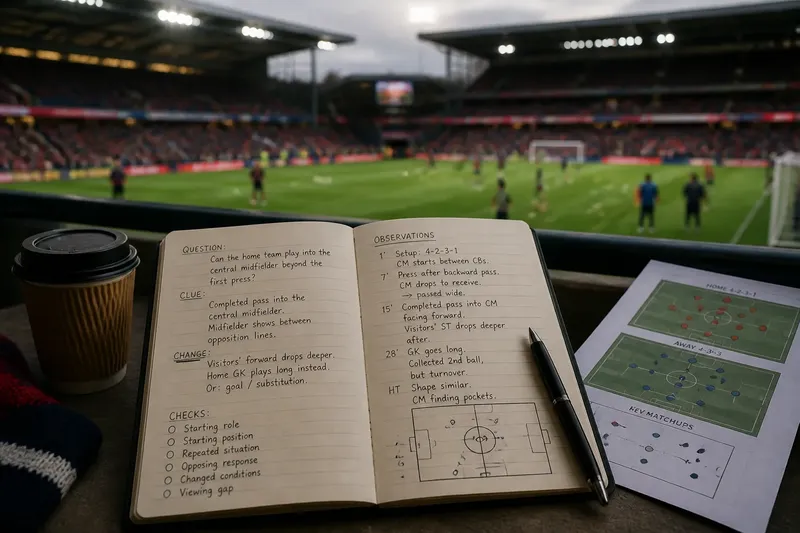
A notes app, the back of a team sheet, or a scrap of paper is enough. Write three short lines before kickoff:
- Question: What role, area, or repeated situation do you want to understand?
- Clue: What visible action would help answer it, such as a fullback stepping forward or a midfielder dropping beside a center back?
- Change: What event might alter the situation, such as a substitution, a goal, or a different starting position?
Say you expect the visitors to press the home goalkeeper’s short distribution. Your question is whether the home team can find its central midfielder beyond that first pressure; the clue is a completed pass into that player, and the possible change is the visitors’ forward dropping deeper. If the goalkeeper starts playing long instead, note whether the home side can collect the second ball. That is a different route to assess, not automatic proof that the press worked.
Use the same routine
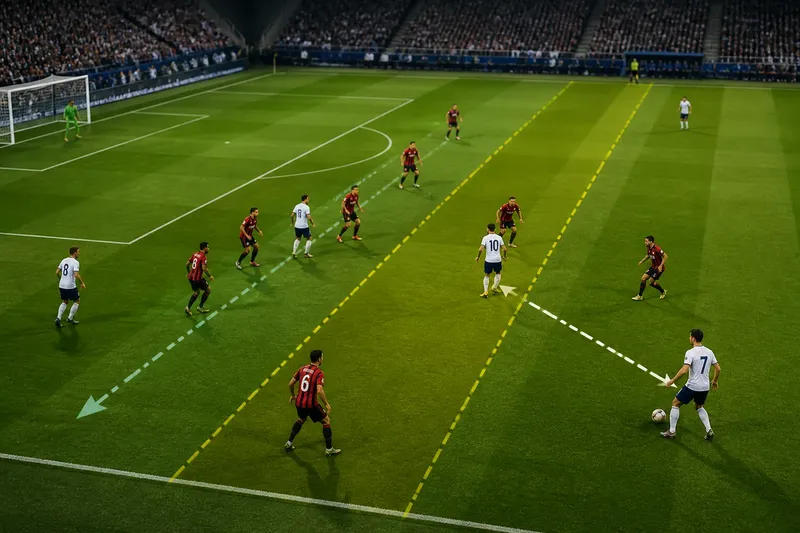
At kickoff, check the starting positions that relate to your question. A formation graphic is a useful first hint, but the players’ movement tells you more: a winger may tuck inside, a midfielder may cover the fullback, or a forward may begin pressing only after a backward pass.
As play settles, look for the clue again. Write a plain observation—“the midfielder drops beside the center backs”—rather than a verdict such as “the team controls the game.” If the clue does not recur, leave the answer open instead of forcing a pattern from one moment.
After a goal, substitution, or clear change in shape, check the same question once more. The note stays consistent, while the conditions around it may have shifted. If the original role disappears from the action, change the question to follow the player or space now shaping that situation.
What should you watch for?
How do I choose a useful question?
Start with a role or area named by the lineups, then connect it to an observable situation, such as a winger receiving near the touchline. Avoid questions that already assume an answer, like “Will the visitors dominate midfield?”
What if I miss part of the match?
Choose a clue that can be recognized without seeing every preceding pass, such as which player receives a clearance or who steps out to press. When you return, resume the same question and mark any missing context as unclear.
When should I change my note?
Change it when the relevant player is substituted, a role shifts, or the teams stop reaching the situation you chose. Keep a brief note of what changed so you do not mistake a new phase for the old pattern continuing.
How can I keep notes during a busy match?
Use a few words rather than a running account: “press after backward pass,” “midfielder drops,” or “role changed after goal.” If watching with friends, say the question in one sentence and return to it when play pauses.
Check each clue
These checks keep the routine consistent without requiring a full match diary. For each one, write what you saw and make the stated choice; if the clue is absent or unclear, use the alternative rather than guessing.
- Starting role: Check whether the player named in your question is in the starting lineup. If present, watch that role; if absent, replace the question with one about the listed player taking the same area or responsibility.
- Starting position: Check whether the player begins in the expected area. If so, keep the original clue; if not, rewrite the question around the area the player actually occupies.
- Repeated situation: Check whether the same cue returns during settled play. If it recurs, note the response; if it appears once or not at all, mark it unclear and avoid calling it a pattern.
- Opposing response: Check whether the opponent presses, drops off, or shifts a player after the cue. If one response is visible, record it; if none is clear, keep watching the same situation rather than assigning an intention.
- Changed conditions: Check whether a goal or substitution changes the relevant roles or space. If it does, note the new condition and reassess the question; if not, continue with the existing clue.
- Viewing gap: Check whether you saw enough of the sequence to identify the cue. If you did, add the observation; if you missed its setup, mark the note unclear and wait for another instance.
Leave room for surprise
At the end, keep the note that best describes what changed, not the one that supports a prediction you never needed to make. Pre-match notes without a predicted score can help you notice how roles and spaces shift, even when the match takes an unexpected route.
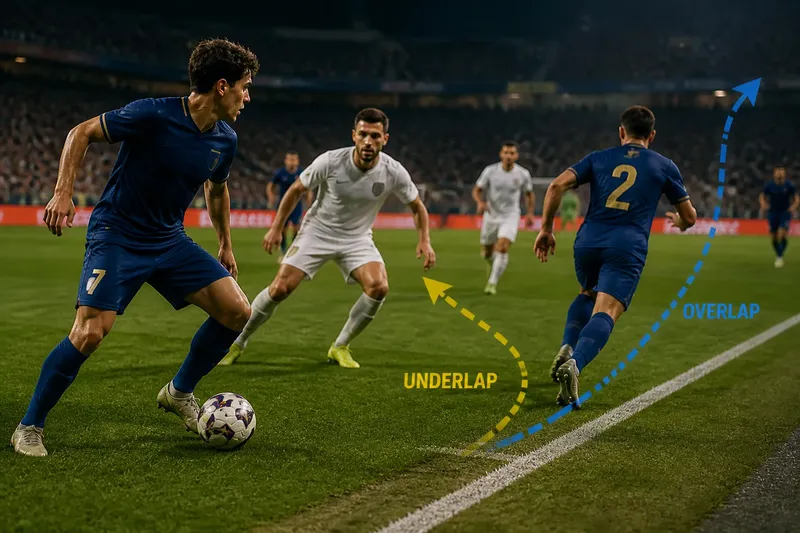
One useful final detail is the condition attached to your observation: “the winger moved inside after the fullback stopped overlapping.” That small link between action and change gives you a clearer memory of the match than a broad label such as “good attack.”