The Half-Space: Why Teams Keep Looking for Room Between Lines
The half-space gives attackers passing angles between the center and touchline. Learn how wide and narrow positioning stretch a defense—and when each fits.
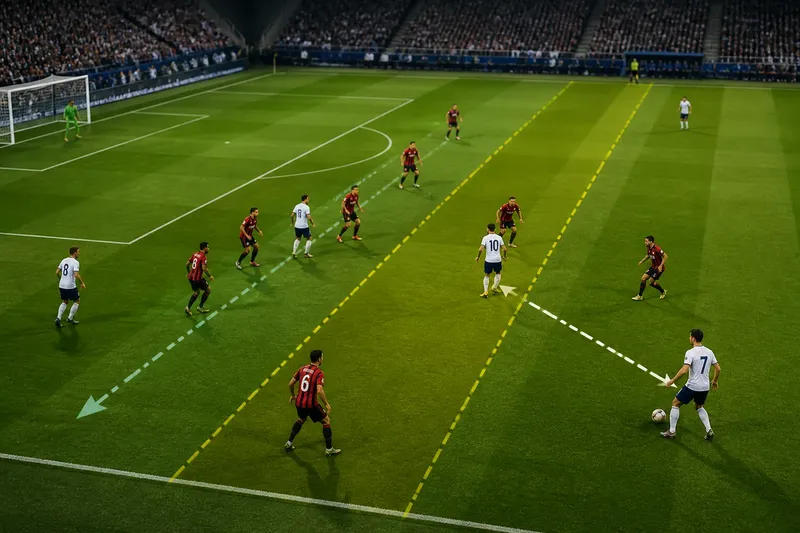
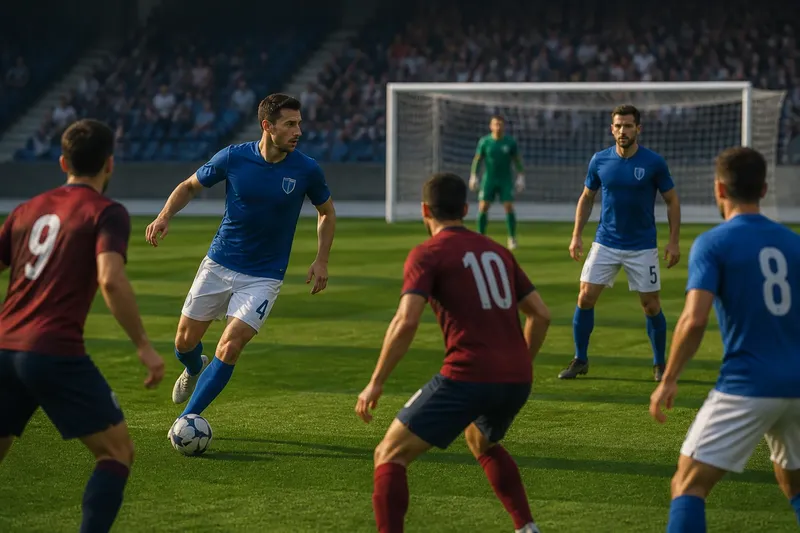
A winger receives near the sideline, but the next pass goes inside to a teammate standing between the opposing midfield and back line. That pocket is the half-space, a channel between the center of the field and the touchline. For a match preview, noticing who can occupy it—and how—offers a useful clue about a team’s attacking options, not a promise of a clear chance.
Finding the channel
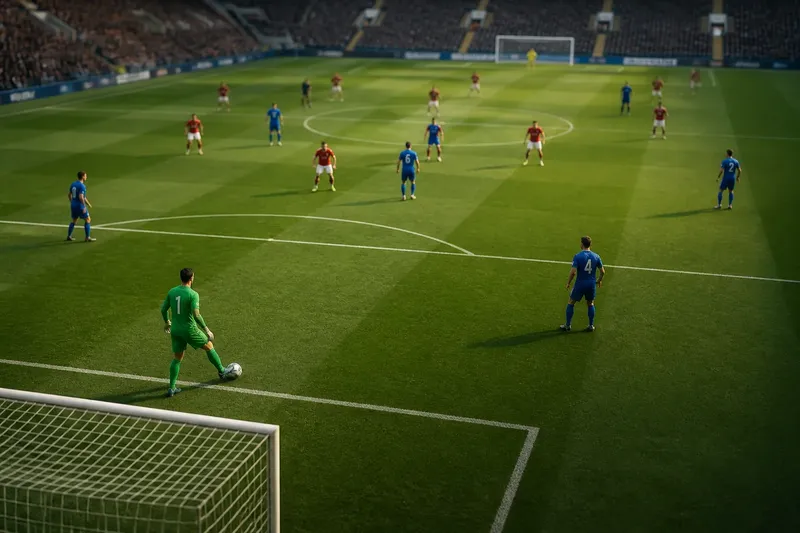
Coaches and commentators use “half-space” for the vertical lane between the central corridor and the wide lane. The boundaries are not painted on the grass, and the space can shrink or shift as players move. It is best understood as a location relative to teammates and defenders rather than a fixed strip.
A player in this lane may receive at an angle that is harder to cover than a pass straight down the middle or along the touchline. From there, they might turn toward goal, combine with a central teammate, or release a runner outside. The available choice depends on the opponent’s distance, body shape, and cover behind the first defender.
That is why occupying a half-space can stretch a defense without automatically creating danger. A defender may step out and leave a gap, but a teammate could cover it; the receiver may have no time to turn; or the passing lane may close before the ball arrives. Position creates possibilities. The next actions decide whether any become useful.
Three ways to occupy
Teams can put a player in the half-space in several ways. Each changes who supplies width, who stays central, and what the opponent must track. A preview is more informative when it identifies the arrangement than when it simply says a team “likes to attack inside.”
Wide player drifting inward
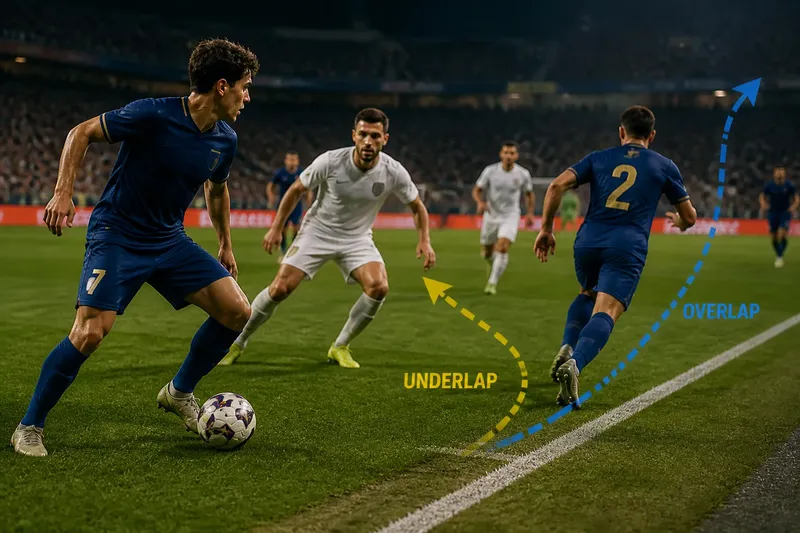
A winger or wide forward can leave the touchline and receive in the inside channel. This suits a player who is comfortable turning toward goal or linking with a striker, especially when a fullback or another teammate is ready to hold the outside lane. The trade-off is that the defense can narrow its shape if nobody keeps that width occupied.
Look for a wide player’s starting position and the movement of the teammate behind them. If both move inward, the opposing back line may have less reason to defend the flank. If the outside lane stays occupied, a defender who follows the inward movement has a harder choice.
Central player moving outward
An attacking midfielder or forward can drift from the center into a half-space. This can draw a marker away from the central lane and open a route for a teammate to move through it. It tends to suit teams with central players who can exchange positions without losing their balance behind the ball.
The risk is that the team leaves the middle short of a receiver. If the opponent can pass the ball out of pressure and attack through that central area, the original movement may have helped the defense more than the attack. A preview should consider who replaces the player in the center, not just who moves into the channel.
Runner arriving from deeper
A midfielder can begin behind the first line of pressure and arrive in the half-space as a pass is played forward. This late movement may be difficult to track because the runner approaches from a different line than a forward already stationed between defenders. It suits a side with a teammate able to hold the ball long enough to find the arriving player.
Timing matters. A run made too early can leave the player waiting among defenders; one made too late may arrive after the receiver has been forced backward. In a preview, note whether the team has a likely passer and runner connection, rather than assuming that a vacant-looking lane will be used.
What the defense must decide
The half-space often creates a dilemma for the nearest defender. Stepping toward the receiver can open room behind or inside; holding position can allow the receiver to turn. The defense’s response may also involve a midfielder tracking back, a center-back shifting across, or a fullback narrowing from the flank.
Those choices affect the whole shape. If the defense shifts toward the ball, the far side may become less protected. If it stays compact, the attacking team may be pushed toward the touchline, where a receiver has fewer directions to turn. Neither response is automatically a mistake; the outcome depends on pressure, cover, and the quality of the next pass.
For a preview, distinguish between a player being present in the lane and being supplied there. A team may repeatedly station an attacker between the lines, yet struggle to pass through the first line of pressure. Conversely, a runner arriving at the right moment may find space even if the team’s starting shape looks narrow.
Choosing a useful lens
Different approaches suit different team profiles. Use the likely movement and its supporting roles to decide which one matters most in a particular matchup.
- Inward-moving wide player: A useful lens when the team has a winger who can receive inside and a teammate able to preserve width. Ask whether the opponent’s fullback follows the movement or hands the player over.
- Outward-moving central player: A useful lens when an attacking midfielder can pull a marker away and another teammate can occupy the middle. Ask whether the defense is likely to track the movement or protect the central lane.
- Deeper arriving runner: A useful lens when a midfielder can time a forward run and a teammate can deliver the pass. Ask whether the opponent’s midfield can see and follow that movement.
Say a team usually has its winger near the touchline, but in an upcoming match that player is expected to start closer to the striker. If the fullback stays wide and a midfielder covers the outside lane, the winger may have room to receive inside; if the whole defense narrows, the outside teammate may instead become the more relevant outlet. The observable question is who receives next and where the defense has shifted—not whether the initial position “worked.”
A simple choice for a preview is to follow the team’s most repeatable route into the channel. If it relies on an inward winger, focus on width and the fullback’s response. If a central player drifts out, watch for a replacement in the middle. If a deeper runner arrives, look for the pass that can release them.
Reading the pattern
When can a half-space receiver turn? A player can turn if the pass reaches them with enough separation from the nearest defender and their body is open toward the attacking end. If pressure arrives from behind or the receiver faces their own goal, the likely next action may be a layoff instead.
Why not stay wide?
Staying wide can hold a defender near the touchline and leave an inside route for someone else. Moving inward offers a closer angle to central teammates, but it may surrender that width unless another player fills it.
Does occupation mean a chance is coming?
No. The position can create a passing angle or force a defensive choice, but the receiver still needs time, support, and a viable next pass. A crowded lane or a misplaced ball can end the attack before it reaches the penalty area.
What should a preview track?
Track who enters the half-space, who keeps the outside lane occupied, and which defender responds. Then follow the next pass or run to see whether the defense has shifted, held its shape, or recovered the lane.
The half-space is most useful as a way to describe a team’s options, not as a magic location. For a clear preview, name the player likely to occupy it, the teammate who supports the move, and the defensive decision it may invite. That gives readers a concrete pattern to watch while leaving room for the match to take a different course.